How Bodywork Regulates the Nervous System: Touch, Trauma, and the Science of Feeling Safe Again.

We live in a world that teaches us to think our way through life. To push. To perform. To override what we feel in the name of productivity. But healing - real, sustainable healing - doesn't begin in the mind.
It begins in the body.
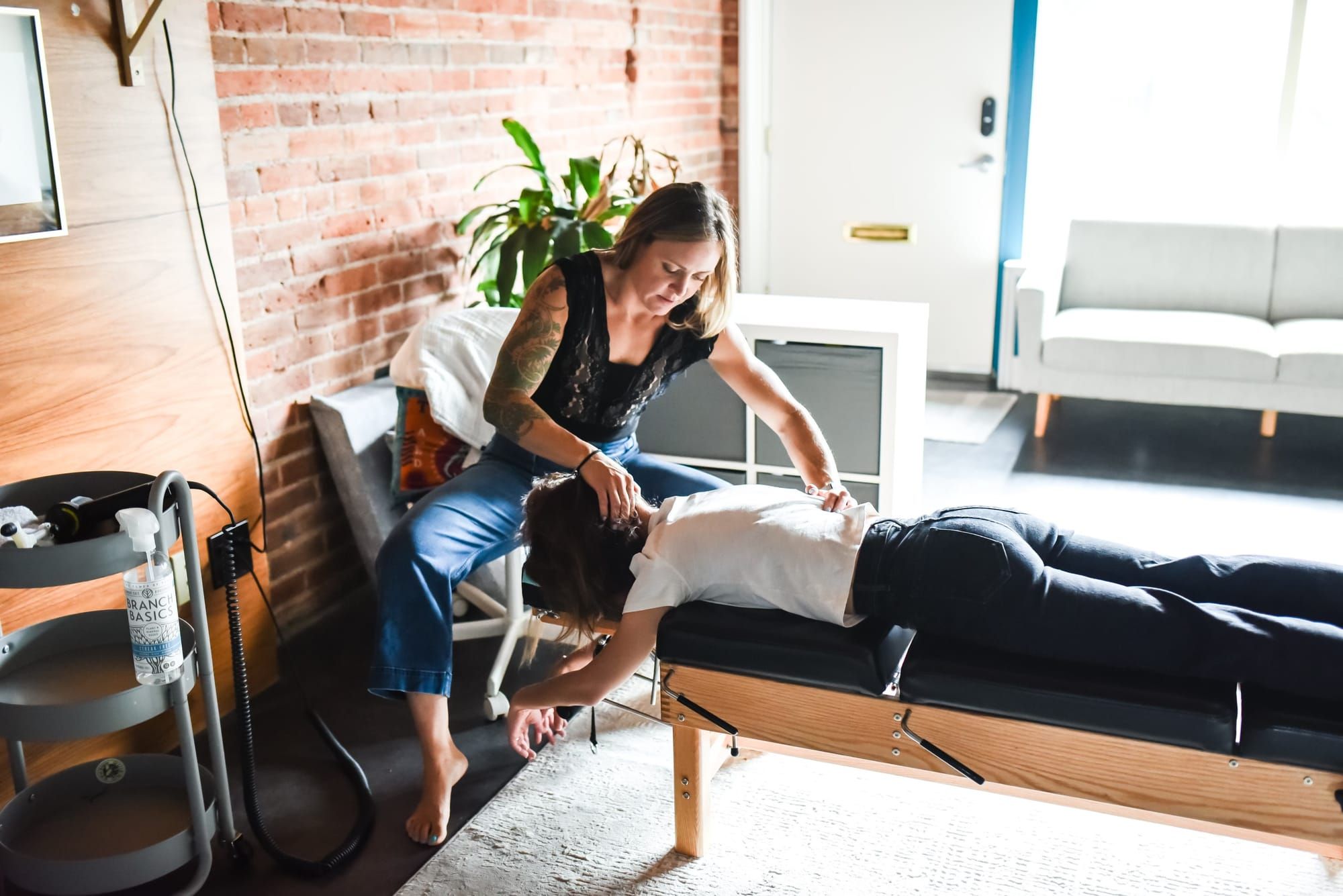
Modern neuroscience is now confirming what many healing traditions have long understood: our nervous systems are shaped not only by thoughts, but by physical experience - by touch, breath, connection, and safety. Bodywork has the capacity to regulate physiology and literally rewire neural circuitry in the brain.
To understand how, we first have to understand the nervous system itself.
Your Nervous System: Always Asking One Question
At its core, your nervous system has one job: Keep you alive.
It is constantly asking: "Am I safe right now?"
When the answer is yes, the body enters regulation - a state where you feel calm, present, emotionally flexible, and connected. When the answer is no, survival responses activate automatically:
- Fight
- Flight
- Freeze
- Shutdown
These are not psychological flaws. They are biological programs. The challenge is that many adults are running these programs even when no real danger is present.
Why?
Because the nervous system responds not just to current reality - but to stored experience.
How Trauma Lives in the Body
Trauma is often misunderstood as only catastrophic events - war, violence, disaster. But trauma is less about the event and more about the nervous system's ability to process it. You do not have to be a wartime veteran to carry trauma. Trauma can form through:
- Emotional neglect
- Abandonment
- Birth or medical experiences
- Chronic stress
- Relational rupture
- Loss
- Societal conditioning
- Growing up without emotional safety.
When experiences overwhelm our capacity to process them, they don't disappear. They get stored in the body. Muscle tone, breath patterns, fascia, posture, and autonomic responses all hold imprints of unresolved experience. Until the body becomes present enough to process what was held, it will continue replaying past programming in present-moment situations. As trauma research continues to affirm: The body keeps the score.
Signs of Nervous System Dysregulation
Dysregulation often shows up in subtle but impactful ways:
- Over-reactivity: emotional responses that feel bigger than the moment.
- Shutting down: numbing, dissociating, going quiet in conflict.
- Hyper-vigilance: always scanning, bracing, anticipating.
- People-pleasing or perfectionism.
- Difficulty relaxing: even in calm environments, the body stays activated.
- Relationship reactivity: responding to present partners through past wounds.
In these moments, the nervous system isn't reacting to the now. It's reacting to what it remembers.
Why Touch Changes the Brain
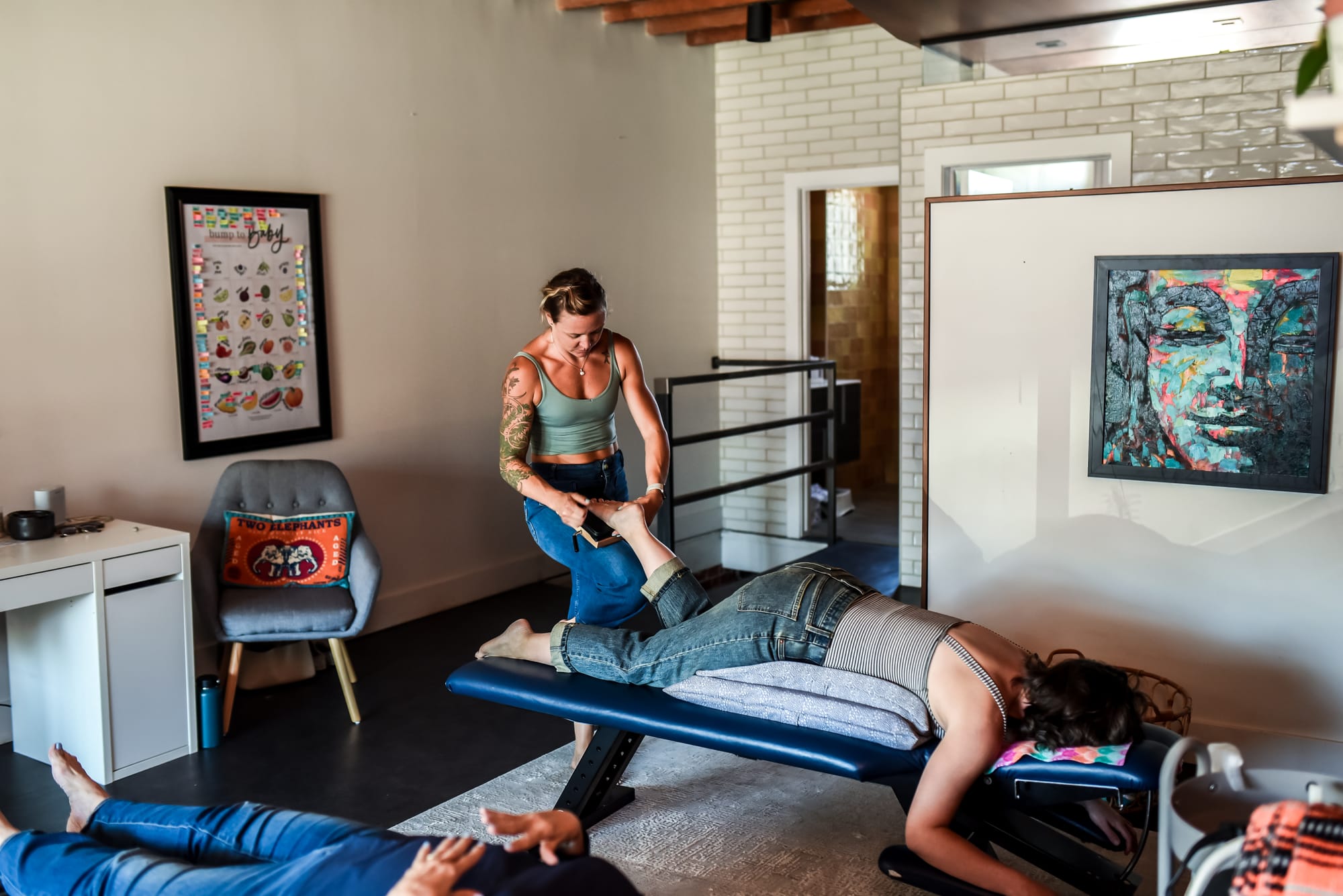
Here's where the science becomes deeply hopeful. Touch - when safe, intentional, and attuned - directly regulates the nervous system. Research shows therapeutic touch can lower cortisol, increase oxytocin, slow heart rate, improve vagal tone, and activate parasympathetic ("rest and regulate") physiology.
But beyond hormones, touch reshapes the brain through neuroplasticity - the brain's ability to rewire based on experience. Safe physical touch creates new neural associations that link bodily sensation with safety rather than threat. In simple terms: safe touch teaches the brain it is safe to be in the body again.
Polyvagal Theory and the Social Nervous System
Polyvagal Theory, developed by neuroscientist Dr. Stephen Porges, describes the nervous system as a hierarchy shaped by safety - not just stress. At the top is the ventral vagal state, often called the social nervous system, or tertiary layer of regulation. When this pathway is active, we feel:
- Calm but alert
- Emotionally open
- Connected in conversation
- Safe giving and receiving touch
This state governs bonding, communication, digestion, immune function, and emotional flexibility. It is the biological foundation of feeling safe with others - and within ourselves.
Vagal Tone: Your Capacity to Return to Safety
The vagus nerve - the longest cranial nerve in the body - runs from the brainstem through the face, heart, lungs, and digestive organs. It acts as a communication highway between the brain and body- but is entirely outside of the spinal cord.
Vagal tone refers to how resilient and responsive this system is - how easily you can return to regulation after stress. High vagal tone supports emotional regulation, stress recovery, heart-rate variability, and relational ease. Low vagal tone may look like chronic anxiety, shutdown, digestive issues, or difficulty feeling safe in connection.
The hopeful reality: vagal tone can be strengthened. And bodywork is one of the pathways.
Co-Regulation: Healing Through Relationship
Before the nervous system chooses fight or flight, it first scans for safety in others. This process is called co-regulation.
Cues that regulate us include:
- Gentle touch
- Hugging
- Soothing vocal tone
- Eye contact
- Slow breathing
- Feeling physically supported
These signals activate the ventral vagal system - shifting the body out of survival and into connection. This is why a hug can lower your heart rate... Why safe touch can bring emotional release... Why receiving bodywork often feels regulating beyond words.
The body recognizes safety before the mind explains it.

How bodywork rewires neural circuitry
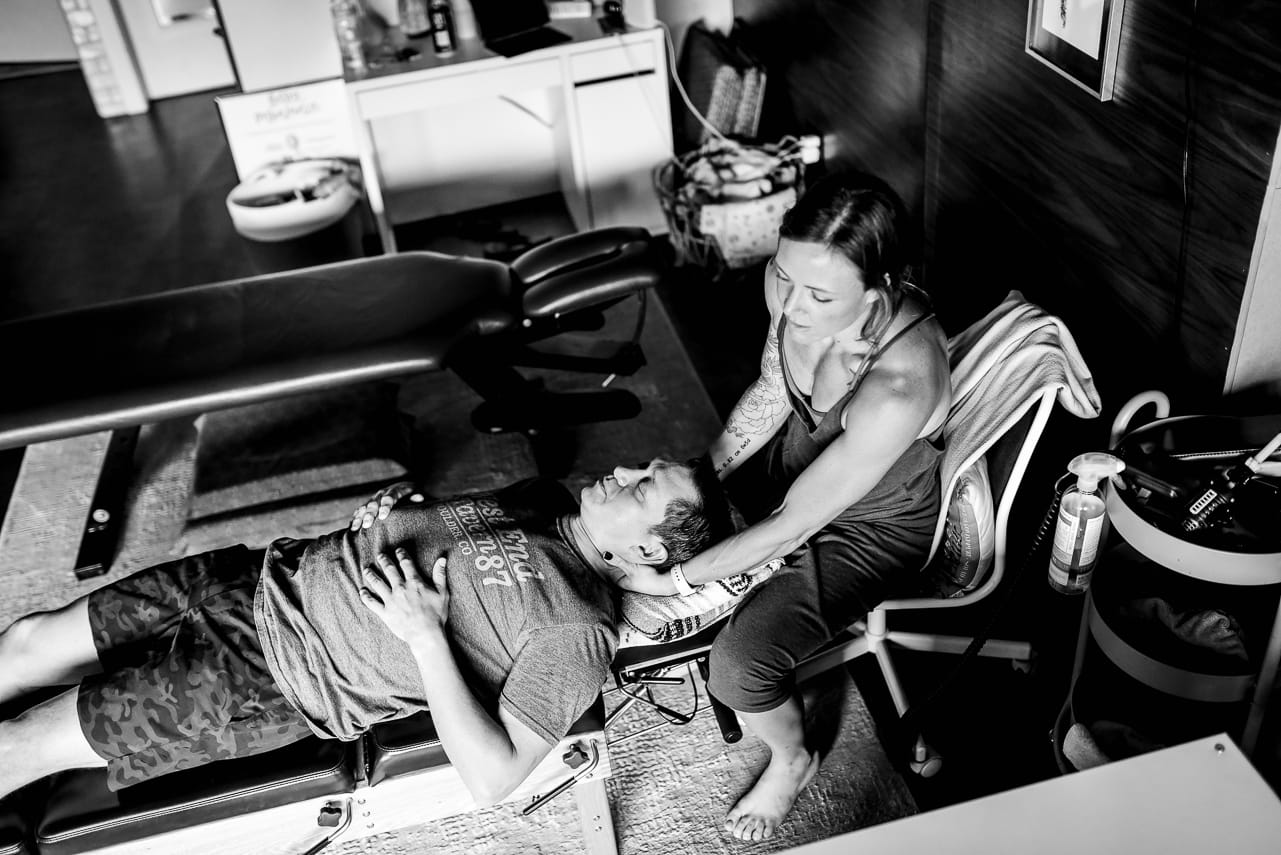
Bodywork - including chiropractic care - works directly with this brain-body feedback loop.
Hands-on care influences regulation through:
- Sensory input: touch and adjustments send mechanoreceptive signals to the brain about tension, position, and safety.
- Pattern interruption: stored protective bracing in muscles and fascia begins to unwind.
- Autonomic regulation: care shifts physiology from sympathetic activation into parasympathetic restoration.
- Vagal activation: spinal, cranial, and breath-related work supports vagus nerve function and social nervous system regulation.
- Body presence: people begin safely re-inhabiting sensation rather than avoiding it.
Patients often report feeling calm, emotional, grounded, or deeply relaxed after care. This isn't accidental. It's neurological regulation in real time.
The Invitation Back Into the Body
Bodywork is not just structural. It is neurological. It is emotional. It is relational. Each session becomes a conversation between body and brain - updating survival patterns while strengthening safety and connection.
You don't need extreme trauma to benefit. You simply need a nervous system shaped by life. Healing doesn't always begin with talking.
Sometimes it begins with a breath...
A softening...
A therapeutic touch...
A moment where your body realizes
"I'm safe now."